
One of the most significant advancements in electric model airplanes has been the adoption of brushless motors. Unlike their brushed counterparts, brushless motors are more efficient, provide greater power, and have a longer lifespan due to reduced friction. This makes them ideal for demanding maneuvers and extended flight times.
Think of the brushless motor as the “engine” of your electric airplane. It converts electrical energy from your battery into mechanical power, driving the propeller with precision. But here’s the kicker: the efficiency of these motors means less heat generation and more flight time per charge, allowing you to stay airborne longer without worrying about overheating or excessive battery drain.
When selecting a brushless motor, consider the KV rating, which indicates the motor’s revolutions per minute (RPM) per volt. A higher KV means faster propeller speeds, but it may require a smaller propeller to prevent overloading the motor. For larger, more stable planes, opt for a lower KV motor with a bigger propeller for smoother performance.
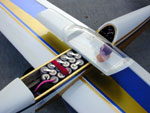
Battery Management: The Lifeline of Your Electric Model Airplane
Batteries are to electric model airplanes what fuel is to full-sized aircraft. Most hobbyists rely on Lithium Polymer (LiPo) batteries due to their high energy density and lightweight characteristics. However, they require careful handling and management to maximize their lifespan and ensure safety.
- Voltage Monitoring: Each LiPo cell operates between 3.7V (nominal) and 4.2V (fully charged). Avoid discharging below 3.0V per cell, as this can cause irreversible damage. Investing in a battery voltage alarm is a smart move; it alerts you when your battery is approaching critical levels during flight.
- Charging: Use a balance charger that ensures each cell is charged equally. Never rush the charging process – slow and steady wins the race. Fast charging can shorten battery life and even cause overheating.
Think of LiPo batteries like high-performance sports cars. They’re powerful, but they require meticulous care and attention. Treat them poorly, and they’ll quit on you faster than you can say “forced landing.”
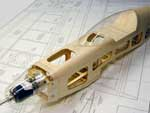
Aerodynamics: The Art of Smooth Flying
Understanding how air interacts with your model airplane is the difference between soaring gracefully and struggling to stay aloft. Let’s break down a few key aerodynamic principles that apply to electric model airplanes:
- Lift and Weight: Lift must counteract the weight of your airplane. High-wing designs (wings placed above the fuselage) are more stable and generate more lift, making them ideal for beginners or those who prefer relaxed flying.
- Thrust and Drag: Your propeller generates thrust, while drag is the resistance caused by air friction. To maximize efficiency, always balance these forces. Use streamlined designs and ensure all components are secured to minimize unnecessary drag.
- Center of Gravity (CG): This is a critical element in maintaining stability. An improperly balanced airplane will be difficult to control and prone to nose-diving or stalling. Always perform a CG check by balancing the model on your fingertips at the wing’s recommended CG point before every flight.
Pro Insight: Adjusting the pitch and angle of attack of your airplane can significantly alter its lift and speed. Experimenting with small changes can drastically improve your plane’s handling characteristics. Just be cautious—overdoing it might lead to unexpected stalls or spins.
Fine-Tuning Control Surfaces: Precision in Movement
Control surfaces are the moveable parts on your airplane that determine its direction and altitude. These include the ailerons, elevator, and rudder. For experienced pilots, fine-tuning these elements can mean the difference between a good flight and an exceptional one.
- Ailerons: These are responsible for roll control. Increasing aileron throw (the amount of movement) allows for faster roll rates, perfect for aerobatic maneuvers. However, too much can make the plane overly sensitive, resulting in choppy handling.
- Elevator: Adjusting the elevator affects the plane’s pitch (nose up or down). Properly setting your elevator trim ensures stable flight, especially during takeoff and landing. A nose-heavy plane will struggle to climb, while a tail-heavy one may be erratic.
- Rudder: The rudder controls yaw (side-to-side movement) and is essential for coordinated turns. For advanced flying, consider using differential thrust (slightly different power settings on multiple motors) to enhance control.
Dual Rates and Expo settings on your transmitter allow you to customize how much control surface movement you get per stick movement. This fine-tuning helps smooth out your plane’s response, giving you greater precision during complex maneuvers.
Weather and Wind: Mastering the Elements
No matter how advanced your electric model airplane is, it’s still at the mercy of Mother Nature. Wind conditions can make or break your flying experience, so understanding how to adapt is crucial.
- Wind Speed and Direction: Always take off and land into the wind for maximum lift and control. Flying downwind (with the wind) will increase your plane’s speed, but turning back into the wind requires more throttle to maintain momentum.
- Thermals and Gusts: Experienced pilots can use thermals (rising columns of warm air) to gain altitude without using power. However, gusts can be tricky. If you’re caught in one, resist the urge to overcorrect. Small, smooth adjustments will keep you in control.
Always check weather apps or local wind readings before flying. Anything above 10-15 mph can be challenging, even for seasoned pilots.
Troubleshooting Common Issues: Keeping Your Plane in the Air
Experienced pilots know that things don’t always go according to plan. Here are some common issues and solutions:
- Loss of Signal: If your airplane suddenly stops responding, don’t panic. Cut the throttle to prevent further damage on impact and regain control when possible. Always perform a range check before flying, ensuring your transmitter and receiver are properly paired.
- Unstable Flight: If your plane wobbles or feels uncontrollable, check for loose parts, misaligned control surfaces, or improper CG balance. Sometimes, even a tiny adjustment can restore stability.
- Propeller Issues: Propellers can become damaged or unbalanced over time, leading to vibration or inefficient thrust. Regularly inspect and replace them as needed, and consider using a prop balancer to ensure smooth operation.
Beyond Flying: The Joy of Modifying and Customizing Your Electric Model Airplane
For many hobbists, half the fun of electric model airplanes lies in modifying and customizing them. From upgrading motors and ESCs for more power to experimenting with different wing configurations, the possibilities are endless.
Decals, paint jobs, and LED lights allow you to personalize your plane, making it truly one-of-a-kind. Some pilots even add action cameras to capture their flights from a bird’s-eye view, adding an extra layer of excitement to the hobby.
The Sky’s the Limit
Electric model airplanes offer an incredibly rewarding experience, combining technology, aerodynamics, and sheer thrill. By mastering the intricacies of brushless motors, battery management, control surfaces, and weather dynamics, you’ll not only keep your plane in the air but also push the boundaries of what’s possible. Every flight is an opportunity to learn, adjust, and perfect your skills.
Ready to take off? Charge your batteries, fine-tune your controls, and let the sky be your playground. Happy flying!